
A growing number of people are reimagining their futures and finding their next chapter in tech. Many individuals from non-tech backgrounds are discovering that transferable skills such as communication, problem-solving, and creativity translate naturally into technical roles. The real challenge is not deciding whether to make the switch, but choosing the tech career that aligns with how you think and work. This blog will guide you through the process of identifying your ideal tech role by offering thoughtful insights and to support your journey.
Navigating the Tech Landscape: Finding Your Ideal Role
Why Consider a Tech Career?
The tech sector is well-positioned for dynamic growth driven by product innovation and AI adoption. This growth translates into abundant opportunities for advancement and professional development. Tech roles often offer competitive salaries and great benefits, reflecting the high demand for specialized skills. The innovation-driven nature of tech means you will consistently engage with cutting-edge technologies and solve complex, real-world problems, fostering a sense of purpose and intellectual stimulation.
Moreover, many tech roles provide flexibility and remote work options, enhancing work-life balance. Finally, a career in tech empowers you to make a meaningful impact on society, whether by developing life-changing applications, securing critical infrastructure, or analyzing data to inform crucial decisions. This is an invitation to join an industry that is shaping the future, and your contribution can be invaluable.
Debunking Common Myths About Switching into Tech
Many individuals harbor misconceptions that deter them from pursuing a tech career change. Let us address these directly and dismantle the barriers they create.
Myth 1: "You need a degree to get into tech": While a traditional degree can be beneficial, it is by no means a prerequisite. According to the CompTIA Tech Jobs Report, 45% of active tech job postings did not specify a four-year degree requirement for candidates. The tech industry values skills, practical experience, and a proven ability to learn and adapt. Many tech professionals come from diverse academic backgrounds, leveraging intensive programs and self-study to acquire the necessary expertise.
Myth 2: "You have to be a math genius": While certain tech roles, like some areas of data science or algorithms, may involve advanced mathematics, many others do not. Frontend development, cybersecurity analysis, and project management, for example, rely more heavily on logical thinking, problem-solving, and communication skills. Coding is a skill that can be learned and mastered with dedication, much like learning a new language or musical instrument. Consistent effort and a growth mindset are what matters the most.
Myth 3: "You need a tech background to succeed in tech": You don’t need a traditional tech background to start a tech career. What matters most are your transferable skills, curiosity, and willingness to learn. Individuals coming from other fields often bring valuable perspectives, problem-solving abilities, and real-world experience that can set them apart in tech roles. Skills like communication, teamwork, analytical thinking, and project management can give you a head start, regardless of your background. In fact, according to HR Dive, communication was the most in-demand skill across nearly 2 million job postings. Tech thrives on diverse perspectives, and your unique experiences can help you approach challenges in creative and innovative ways. Check out this blog for tips on leveraging your transferable skills for a smoother transition into tech.
Identifying Your Strengths: A Self-Assessment for Career Transition
Before diving into specific tech roles, it is imperative to conduct a thorough self-assessment. This process will clarify your unique value proposition and guide you towards a tech career that aligns with your capabilities and aspirations.
What Are Your Core Skills?
Every professional journey cultivates a rich set of skills that are highly valuable in the tech world. Do not underestimate the power of your existing expertise. Your non-technical experience provides a strong foundation for your new career.
Consider your core skills: Those fundamental abilities that underpin your professional success. Have you consistently demonstrated exceptional communication skills, conveying complex information to diverse audiences, negotiating solutions, or leading discussions? These are critical in tech for roles like product management, technical writing, or even as a developer explaining your code.
Think about your problem-solving abilities: Have you faced intricate challenges in your previous roles and systematically worked through them to find effective solutions? This is the bedrock of virtually every tech role, from debugging software to architecting secure systems or analyzing data anomalies. Your experience in identifying root causes, developing strategies, and implementing solutions is directly transferable.
Reflect on your analytical skills: Do you naturally approach situations with a methodical mindset, breaking down complex data or scenarios into manageable components? Have you excelled at interpreting information, identifying patterns, or making data-driven recommendations? Whether you were analyzing market trends, financial reports, or scientific data, this aptitude for analysis is highly sought after in roles such as data analysis, business intelligence, and cybersecurity.
Furthermore, consider:
- Attention to Detail: Crucial for quality assurance, coding, and cybersecurity.
- Critical Thinking: Essential for evaluating options, identifying risks, and making informed decisions.
- Project Management: Organizing tasks, managing timelines, and coordinating teams are vital in tech development cycles.
- Adaptability and Continuous Learning: The tech landscape continues to evolve; your willingness to learn new tools is key to staying relevant and a your advancing your skills.
- Customer Service/Client Relations: Valued in technical support, sales engineering, and product roles.
What Are Your Passions/Interests/Goals?
Beyond skills, your intrinsic motivation is important. A truly fulfilling tech career will align with what truly excites you. Take time to explore your passions and interests:
- What topics do you find yourself researching in your free time? Are you fascinated by artificial intelligence, digital privacy, or how software applications are built?
- What kind of problems do you enjoy solving? Do you get a thrill from optimizing processes, protecting against threats, or creating something new from scratch?
- Which causes or industries do you care about most? Tech plays a role in every sector, including healthcare, finance, and education, and it can be a powerful tool to tackle challenges and create positive impact in the areas you’re passionate about.
Now, consider your career goals:
- What kind of impact do you want to make? Do you aspire to build products that reach millions, safeguard critical data, or uncover insights that drive strategic decisions?
- What work environment do you thrive in? Do you enjoy working on collaborative teams, independently, or a mix of both?
- What are your long-term career aspirations? Do you envision yourself as a technical expert, a team leader, a product innovator, or an entrepreneur?
Understanding your passions, interests, and goals goes beyond personal satisfaction. It helps you find a path where you will be most motivated and engaged. This ensures you are not simply following trends but building a sustainable and fulfilling career.
Key Questions to Ask Yourself Before Switching Careers
To sharpen your focus, ask yourself the following questions. Your honest answers will reveal which tech paths align best with your natural interests and strengths:
- Do you enjoy problem-solving or creative building?
- If you are energized by dissecting complex issues, troubleshooting errors, and optimizing processes, roles in cybersecurity, DevOps, or quality assurance might appeal to you.
- If you find joy in bringing new ideas to life, designing user experiences, or crafting elegant code from scratch, then software engineering (frontend/backend), UI/UX design, or product development could be your calling.
- Do you prefer structured data or dynamic systems?
- If you appreciate order, precision, and extracting insights from organized information, exploring data science, data analytics, or business intelligence roles would be beneficial.
- If you are more intrigued by the intricate interplay of components, the flow of information, and ensuring the seamless operation of digital infrastructure, consider careers in DevOps, cloud engineering, or systems administration.
- Are you interested in protecting systems, analyzing trends, or building products?
- If your inclination is towards vigilance, identifying vulnerabilities, and defending against threats, cybersecurity is a natural fit.
- If you are fascinated by patterns, predictions, and translating raw information into actionable strategies, data science and AI careers will leverage this strength.
- If your passion lies in fixing and bringing tangible digital solutions to users, software engineering, product management, or product design will allow you to build.
By carefully reflecting on these questions, you can start to form a clearer picture of the tech areas where you can thrive. This self-awareness is one of your most valuable tools for navigating the diverse world of technology.
Key Entry Points: Tech Career Path for Career Changers
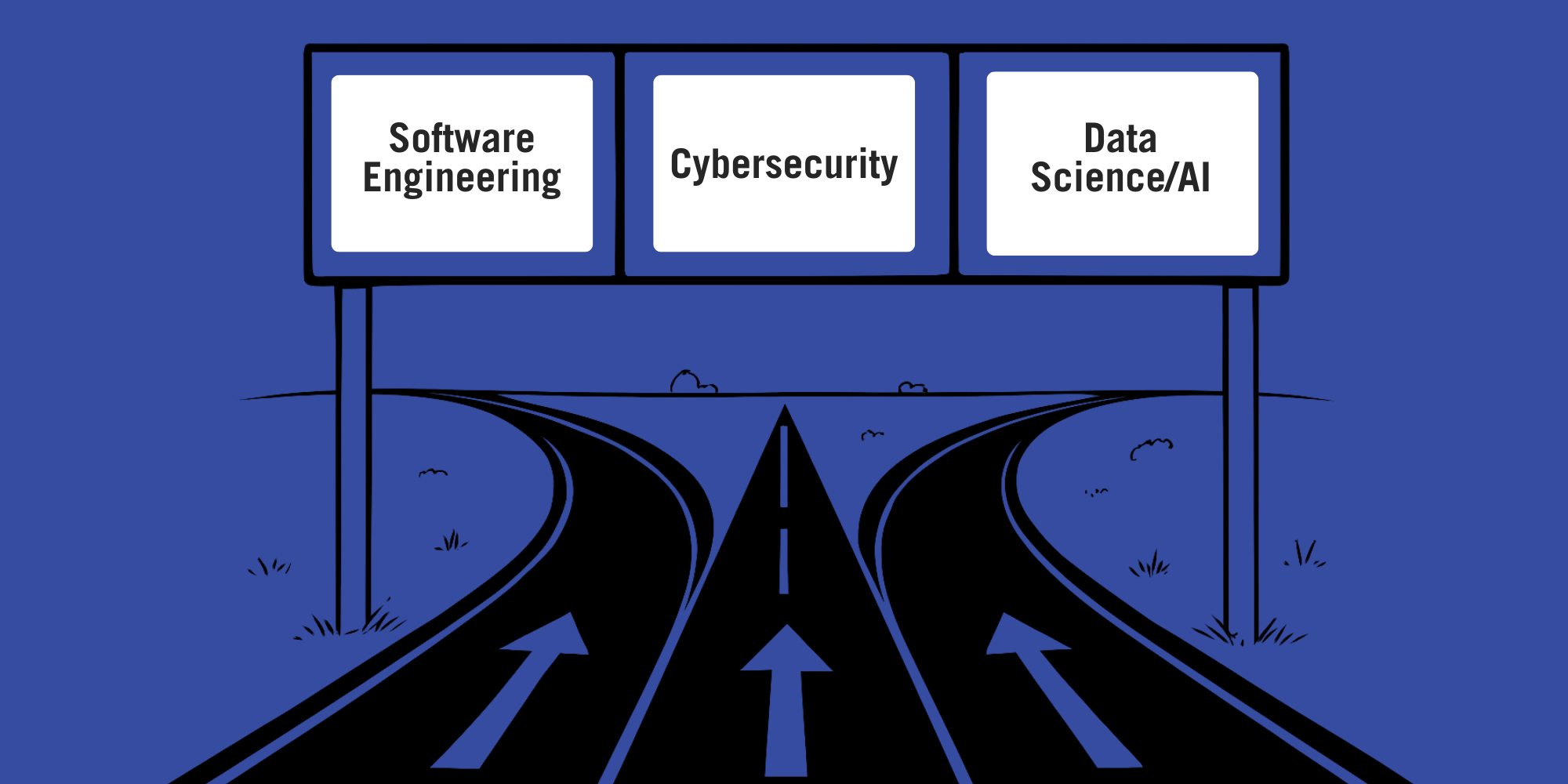
Next, let’s explore three in-demand tech career paths that provide great opportunities for career changers. Each path draws on different skills and focuses on unique areas of the digital landscape.
Tech Career Path #1: Data Science & AI
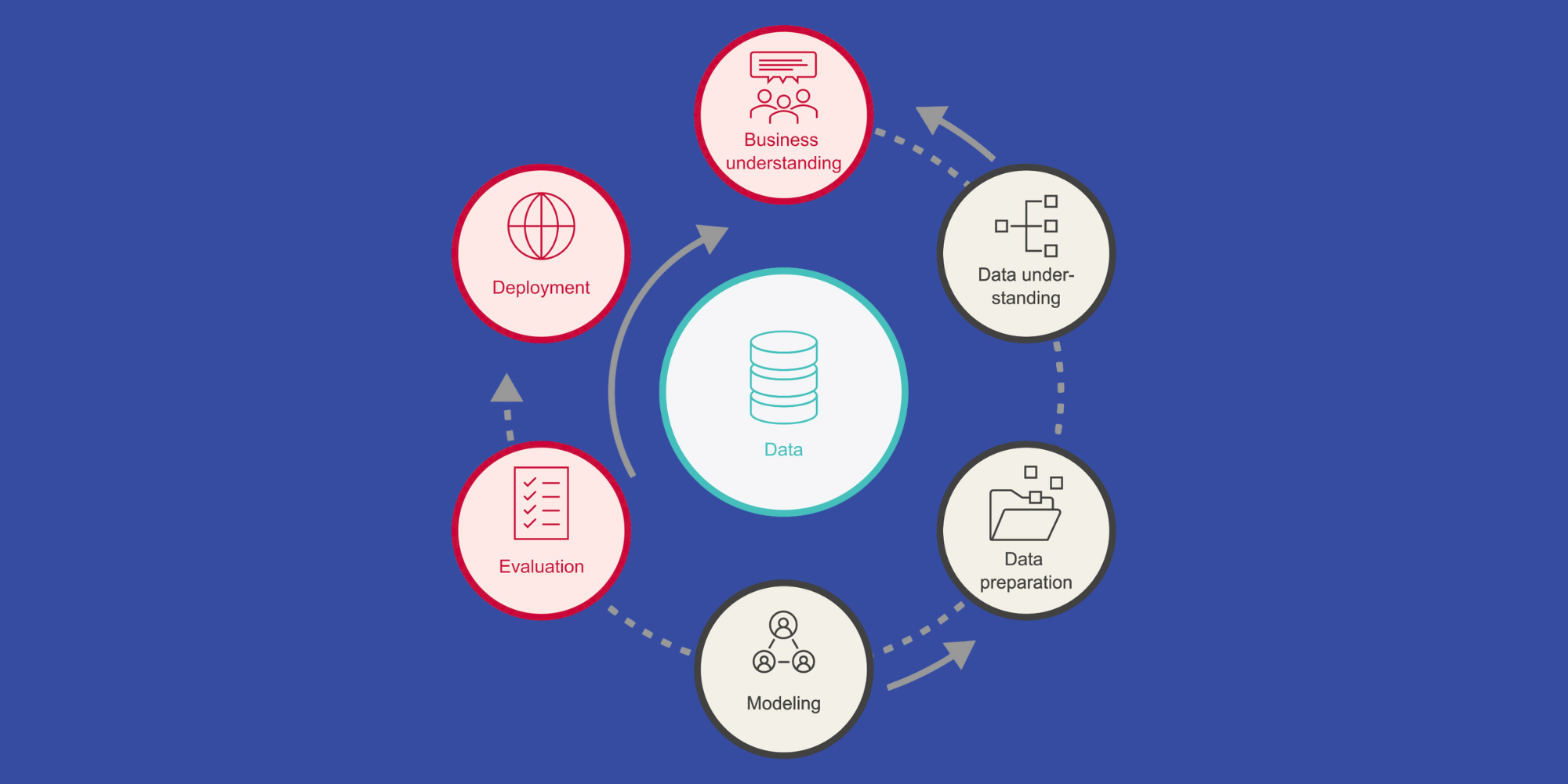
Data Science and Artificial Intelligence (AI) is an expanding field that focuses on extracting knowledge and insights from data in various forms, often using machine learning algorithms to enable systems to learn and make decisions. This path is ideal for individuals who possess strong analytical skills, a keen interest in statistics and mathematics, and a desire to uncover hidden patterns and drive data-driven decision-making.
What you will do:
- Data Scientists collect, clean, and analyze large datasets, build predictive models, and communicate complex findings to stakeholders.
- Machine Learning Engineers help design, build, and deploy machine learning models, often collaborating with software and data teams on intelligent applications.
- Data Analysts focus on interpreting data, creating visualizations, and providing actionable insights to inform business strategy.
While roles like Data Scientist, Data Analyst, and Machine Learning Engineer differ in focus and technical depth, they share a common foundation in data-driven thinking, statistics, and applied machine learning.
Transferable skills that make you a great fit:
- Analytical thinking: Your ability to dissect information and identify trends from any previous field (e.g., market analysis, scientific research, financial reporting).
- Problem-solving: The methodical approach you take to tackle complex challenges.
- Communication: Clearly explaining findings to non-technical audiences.
- Attention to detail: Essential for data cleaning and model accuracy.
- Curiosity: A natural desire to ask "why" and explore data.
Career Outlook: The demand for data scientists is projected to grow significantly. According to the U.S. Bureau of Labor Statistics, employment of data scientists is projected to grow 34% from 2024 to 2034. While competition for entry-level roles can be strong, candidates with practical experience, strong portfolios, and business communication skills are well-positioned in this growing field. As organizations increasingly rely on data for competitive advantage, this field offers immense opportunities. In practice, this might look like analyzing customer behavior to reduce churn, building a model to forecast demand, or creating dashboards that guide executive decisions.
Tech Career Path #2: Cybersecurity
This section features expert guidance from Nathan Wendlowsky, Cybersecurity Curriculum Writer at Flatiron School, offering practical insights for those exploring cybersecurity careers.
Cybersecurity is a critical and growing field dedicated to protecting computer systems, networks, and data from digital attacks. This path is perfect for individuals who are detail-oriented, have a strong sense of responsibility, enjoy problem-solving under pressure, and are committed to safeguarding information and privacy.
What you will do:
- Security Analysts monitor systems for breaches, investigate incidents, and implement security measures. You'll spend time reviewing security alerts, analyzing logs to understand what's happening on your network, and documenting incidents. Much of your day involves separating real threats from false alarms and communicating findings to your team.
- Penetration Testers (ethical hackers) simulate cyberattacks to identify vulnerabilities before malicious actors do. You'll test applications, networks, and systems by trying to break into them legally, then document your findings and recommend fixes.
- Security Architects design and build secure IT systems. You'll plan security infrastructure, choose appropriate tools and technologies, and ensure new systems are built with security in mind from the ground up.
- Incident Responders react to and mitigate active cyber threats. When something goes wrong, you're the first on the scene, containing the damage, investigating what happened, and helping the organization recover.
What Beginners Often Misunderstand About Cybersecurity
Many people think cybersecurity is all about hacking or that you need to know everything about every technology before you start. The reality is different. Cybersecurity is less about memorizing every attack technique and more about developing a security mindset, thinking critically about how systems can fail, and understanding how attackers think.
Beginners also assume they need deep programming skills right away. While scripting helps (especially Python for automation), many entry-level roles focus more on using existing security tools, analyzing data, and understanding security concepts. You don't need to be a developer to start, though learning to code will help you advance.
Another misconception: that cybersecurity is a solo job where you sit alone hunting threats. In reality, it's highly collaborative. You'll work with IT teams, communicate with non-technical stakeholders, and often coordinate responses across departments.
What Skills Matter Most in the First 6–12 Months
Technical foundations: Understanding how networks function, what normal traffic looks like versus suspicious activity, and basic operating system knowledge (Windows and Linux) will carry you far. You don't need to be an expert, but you need enough foundation to understand what you're protecting.
Tool proficiency: Learning to use SIEM tools effectively is crucial for Security Analyst roles. Getting comfortable with tools like Splunk, analyzing logs, and writing basic queries will take up much of your early learning.
Communication: This surprises people, but explaining security issues clearly to people who aren't technical is one of the most valuable skills you can develop early. You'll write incident reports, explain risks to leadership, and translate technical findings into business language.
Critical thinking: The ability to ask "why is this happening?" and methodically investigate is more important than knowing every security tool. Developing your investigative approach and learning to think like an attacker will serve you throughout your career.
Continuous learning habit: Threats evolve constantly. Establishing a habit of reading security news, following researchers, and staying current with new attack techniques early in your career sets you up for long-term success.
What to Expect When You're Learning
Learning cybersecurity can feel overwhelming at first because the field is vast. You'll encounter new terminology, unfamiliar concepts, and tools that seem complex. That's normal. Everyone starts there.
Expect to spend significant time on foundational networking concepts. Understanding how data moves through networks, what protocols do, and how systems communicate is essential groundwork. It might feel tedious, but these basics make everything else make sense.
You'll also spend time learning by doing, working through labs where you set up vulnerable systems, try to exploit them, then patch them. This hands-on practice is where concepts click. Reading about SQL injection is one thing; actually performing one (in a safe lab environment) and then learning to prevent it is entirely different.
Be prepared for moments of frustration. Security tools can be finicky, labs don't always work as expected, and some concepts take time to understand. The key is persistence. When something doesn't make sense, try it a different way, ask for help, or take a break and come back to it.
Most importantly, expect to develop a new way of thinking. You'll start noticing security issues in everyday technology, questioning how things work, and thinking about what could go wrong. This security mindset is one of the most valuable outcomes of your learning.
Which Tools or Technologies Are in Demand
SIEM platforms like Splunk, IBM QRadar, or Microsoft Sentinel are essential for Security Analyst roles. Employers consistently look for candidates with SIEM experience.
Cloud security skills are increasingly critical as organizations move to AWS, Azure, and Google Cloud. Understanding how to secure cloud environments and knowing cloud-native security tools sets you apart.
Scripting and automation using Python is highly valued. Security work involves repetitive tasks that can be automated, and being able to write scripts makes you more efficient and more hireable.
Vulnerability assessment tools like Nessus, Qualys, or OpenVAS are common in many organizations. Knowing how to run scans, interpret results, and prioritize remediation is practical, in-demand knowledge.
Security frameworks like NIST CSF, CIS Controls, and ISO 27001 come up constantly in job descriptions. Understanding how these frameworks guide security programs helps you speak the language employers use.
Threat intelligence platforms and endpoint detection and response (EDR) tools are growing in importance as organizations take more proactive approaches to security.
The specific tools matter less than understanding security concepts. Tools change, companies use different vendors, but if you understand what the tool is trying to accomplish and why, you can learn any specific platform.
Advice for Someone Exploring Cybersecurity
Start by getting comfortable with the basics: how networks work, how operating systems function, and what common attacks look like. You don't need to master everything, just build enough foundation to understand what you're learning next.
Don't try to learn everything at once: Cybersecurity is enormous. Pick one area that interests you, whether it's network security, application security, or governance and compliance, and go deep there first. You can always branch out later.
Get hands-on as early as possible: Set up virtual labs, work through Capture the Flag (CTF) challenges, or practice in platforms like TryHackMe or HackTheBox. Reading about security is helpful; doing security work is how you actually learn.
Connect with the cybersecurity community: Follow security researchers on social media, join Discord communities, and attend virtual meetups. The community is generally welcoming to beginners, and you'll learn faster by engaging with people already doing the work.
Finally, remember that everyone in cybersecurity started somewhere, usually knowing very little. The field needs people who think differently, bring diverse perspectives, and approach problems with fresh eyes. Your non-traditional background isn't a disadvantage, it's what makes you valuable.
Career Outlook: With cyber threats escalating, the demand for cybersecurity professionals is high. The U.S. Bureau of Labor Statistics projects a 29% growth for Information Security Analysts from 2024 to 2034, much faster than the average for all occupations. This indicates a robust and future-proof career.
Tech Career Path #3: Software Engineering
Software Engineering involves developing and maintaining software applications, from mobile apps and websites to complex enterprise systems. This path appeals to individuals who enjoy logical construction, creative problem-solving through code, and seeing their creations come to life.
What you will do:
- Frontend Developers build and update the user-facing parts of websites and applications (what you see and interact with).
- Backend Developers create and maintain the server-side logic, databases, and APIs that power applications.
- Full-stack Developers work on both frontend and backend aspects.
- Mobile Developers specialize in creating applications for iOS or Android.
Transferable skills that make you a great fit:
- Logical thinking: Breaking down complex problems into smaller, manageable pieces.
- Problem-solving: Developing efficient and effective code solutions.
- Creativity: Designing intuitive user interfaces or elegant code architectures.
- Attention to detail: Minimizing bugs and ensuring code quality.
- Patience and persistence: Debugging can be challenging, requiring resilience.
- Collaboration: Working effectively within development teams.
- Process improvement: Optimizing workflows and code bases.
Career Outlook: Software development continues to be a cornerstone of the tech industry, with sustained demand. The U.S. Bureau of Labor Statistics projects a 25% growth for software developers, quality assurance analysts, and testers from 2024 to 2034, much faster than the average. This field offers consistent opportunities across various industries.
Mapping Your Background to a Tech Role
*Please note that these are intended to provide a framework for applying your past knowledge to your new career, not to limit the career you choose.
- From Research/Academia (e.g., Biologist, Historian, Sociologist): Your rigorous analytical skills, experience with data collection, statistical reasoning, and ability to derive conclusions from complex information are highly applicable to Data Science & AI. You are adept at identifying patterns and constructing arguments based on evidence.
- From Law Enforcement/Military/Compliance (e.g., Police Officer, Paralegal, Auditor): Your experience in investigation, risk assessment, adherence to protocols, understanding of threats, and maintaining confidentiality are directly transferable to Cybersecurity. Your ability to work under pressure and respond to incidents is invaluable.
- From Arts/Design/Communications (e.g., Graphic Designer, Writer, Marketing Specialist): Your creativity, understanding of user experience, attention to aesthetics, and ability to communicate effectively are excellent foundations for Frontend Software Engineering (especially UI/UX), or even roles in Product Management that bridge technical and user needs.
- From Customer Service/Sales (e.g., Retail Manager, Account Executive): Your problem-solving skills, ability to understand user needs, and knack for clear communication are assets in Software Engineering (understanding user stories, quality assurance), or potentially in Technical Support leading to other tech roles.
- From Project Management/Operations (e.g., Operations Manager, Project Coordinator): Your organizational skills, ability to manage complex tasks, and focus on efficiency translate well into Software Engineering (as a contributor to agile teams), DevOps, or even higher-level Technical Project Management within a tech company.
Examples of Successful Career Pivots
- Michael Diaz, Software Engineering student: He worked as a head of customer service before transitioning into software engineering. His management and communication skills proved useful in his new field, and his passion for building systems, combined with his experience collaborating with engineers and seeing them solve real customer experience issues, inspired him to make the career pivot. He currently works as a software engineer at Attentive.
- Igor Vlasenko, Cybersecurity student: After working in the service industry for 6 years, his curiosity about cybersecurity breaches across various industries sparked his interest in the field. He currently works as a Senior Information Security Analyst at Western Union.
- Frances Cue, Data Science facilitator at Flatiron School: A former Nurse transitioned into a data science/AI engineering role. While working as a telemedicine nurse, her curiosity about the data team’s work, such as creating visualizations and metrics, motivated her to pursue a move into the data department, supported by a bootcamp certification. She now works as a data scientist/AI engineer at a large healthcare company, where she implements Vertex AI search engines and recommendation engines.
These examples underscore a crucial point: your past experience is not a hindrance. Embrace your non-traditional background as a strength, as it equips you with diverse perspectives and capabilities that are highly valued in the tech sector.
Bridging the Gap: Education and Training for Your Tech Journey
Once you have identified your target tech path, the next critical step is acquiring the necessary skills. Numerous effective avenues exist for career changers to bridge the knowledge gap.
How Tech Bootcamps Support a Career Change to Tech
Tech bootcamps have emerged as an incredibly effective and accelerated pathway into the tech industry for career changers. They are designed to equip individuals with the practical skills required for entry-level tech roles in a concentrated timeframe, typically 3-6 months.
- Structured Learning Paths for Beginners: Bootcamps offer industry-relevant curricula that take you from foundational concepts to advanced techniques. The structured environment, career support, and personalized coaching create an immersive learning experience that fosters rapid skill acquisition. You will follow a clear roadmap, ensuring you learn the most relevant technologies and methodologies.
- Hands-on Projects and Real-World Experience: The hallmark of a successful bootcamp is its emphasis on practical application. You will spend a significant portion of your time building projects, often working on simulated real-world scenarios or even contributing to open-source projects. This project-based learning approach is vital because tech employers prioritize demonstrable skills and a portfolio of work over academic credentials.
- Career Services and Job-Search Support: Beyond technical training, most bootcamps provide robust career services. This includes dedicated career coaching, resume and cover letter workshops tailored for tech roles, interview preparation, and networking opportunities with hiring partners. Bootcamps also boast strong alumni networks and connections with companies actively seeking talent, easing the job search process. They are invested in your success, understanding that their reputation is built on their graduates' employment outcomes.
Building a Portfolio: Demonstrating Your Abilities
A strong portfolio is your most powerful tool as a career changer in tech. It serves as tangible proof of your skills and dedication, showcasing what you can actually do, rather than just what you have studied.
Your portfolio should include:
- Project Work: For Data Science, include analyses, visualizations, and machine learning models. For Cybersecurity, showcase security reports, vulnerability assessments, or incident response plans. For Software Engineering, present functional applications, websites, or contributions to open-source projects.
- Code Repositories (e.g., GitHub): For roles involving coding, a well-maintained GitHub profile with clean code and clear READMEs for each project repo is essential. It demonstrates your ability to follow best practices, coding style, and problem-solving approach.
- Case Studies: Explain the problem you addressed, your approach, the tools you used, your challenges, and the results. This demonstrates your thought process and understanding beyond just the final output.
- Personal Website/Blog: A professional online presence can host your portfolio projects, resume, and any tech-related writings or reflections, further showcasing your passion and communication skills.
As Tony Kim, a Technical Content & Partnership Strategist at MongoDB and Flatiron School facilitator, shared in the blog:
“To make your projects stand out, focus on quality, not quantity.”
A few well-executed, impactful projects are far more impressive than dozens of half-finished tutorials. Ensure your projects are clean, well-documented, and, where possible, unique in their problem space or implementation. This portfolio is your professional calling card, speaking volumes about your capabilities.
Ready to Make a Career Change to Tech?
The opportunity to transform your career and build a rewarding future in tech is not just a possibility; it is an accessible reality for those prepared to take decisive action. Your unique background, combined with focused training and unwavering determination, makes you a highly valuable candidate in this industry. We are here to guide you every step of the way.
How to Take the First Step
The beginning of any career transition can feel overwhelming, but it is also an opportunity to gain clarity. Start by committing to action and exploring roles within Data Science and AI, Cybersecurity, and Software Engineering. Reviewing job descriptions, required skills, and potential career paths will help you refine your focus and establish a clear direction. Once you have a clear target, it is time to invest in your skill development.
Design Your Future Today
Ready to commit to your transformation?
>> Begin your application today
If you have any questions or need personalized guidance on which path is right for you, or how your unique background fits into the tech landscape, schedule a meeting with our admissions team. They are equipped to provide tailored advice and clarify any aspect of your career transition.
The tech industry is awaiting your talent and dedication. Seize this opportunity to redefine your professional trajectory and embark on a career that is challenging, rewarding, and impactful.

.png)